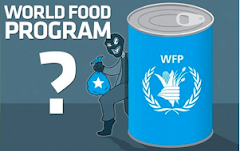
Showing posts with label somalia. Show all posts

Wednesday, September 7, 2011

Armed Militia Grab the Famine Business


MOGADISHU, Sep 7, 2011 (IPS) - Armed groups are withholding aid and preventing Somali famine refugees from leaving camps to ensure the continued supply of food by aid agencies that they are presently selling on the open market.


Since Mohamed Elmi, 69, and his family arrived at a camp for famine refugees in Mogadishu they have barely had enough to eat. Armed gunmen running the camp steal their food and prevent them from leaving to search for aid elsewhere, he says.

Elmi told IPS that this happens because aid agencies deliver food to the people running the camp for distribution and not to the famine victims themselves. And they are prevented from leaving because aid will no longer be delivered to the camps if they do.

"I don’t know who is running this, but we have said time and again that we are never, never given anything by the foremen running (the camp). Let them kill me if they want… We cannot leave here to find a better place," an emancipated Elmi told IPS. He asked IPS not to publish the name of his camp as he fears for his safety.

Tens of thousands of desperately hungry Somalis displaced from the drought-stricken south are not receiving the food aid meant for them. Gunmen have set up unathourised refugee camps in Mogadishu just to steal the food delivered by humanitarian agencies. It is believed the food is being sold on the local markets.

There are dozens of camps with thousands of families in the bullet-scarred Somali capital of Mogadishu. Not all are official camps. These are often run by men from the local clan militias who divert famine victims entering the city to the ‘camps’ they have set up in deserted buildings in Mogadishu.

This is what happened to Mahad Iyo, 54, who arrived in Mogadishu in search of aid in August.

Iyo said that he and other displaced people walked for days to reach Mogadishu. At the city’s entrances they were greeted by armed gangs and were directed to a disused government building. The building was filled with refugees who had constructed makeshift tents using sticks and old ragged cloth. "They want to use us for their own benefit," Iyo now says of the men who so eagerly offered him help when he first arrived. "We are not registered for the aid and neither are we given regular help. Food and other essentials are brought to the camp by the agencies but they are quickly taken away by the foremen," said Iyo.

He said he would prefer to leave the camp and go back to his village in southern Somalia where he would be "better off dead".

Mohamed Nur, a former clan militia leader, runs one of the many camps in Mogadishu and he agreed to speak to IPS to "set the record straight."

Nur admitted that he has no experience in relief work and that he was not appointed to run the camp by either government or aid agencies. He said he took on the responsibility himself "after seeing the influx of desperate fellow Somalis."

"Who will do this work if we don’t stand up to do it? The government is corrupt and the aid agencies don’t know our people better than we do. So we have set up this camp of 20,000 people, but the aid agencies never bring in enough food for the people," Nur told IPS. He was flanked by Kalashnikov- branding gunmen outside the camp of barely 2,000 people.

Nur said he doesn’t keep a register of camp residents or of the food deliveries as he and his "co- volunteers" have no time for "useless paperwork". He added that neither government nor the aid agencies require him to fill in any documentation.

Nur denied that he or others steal aid. But many people at Nur’s camp complained to IPS about the lack of assistance and food.

The head of the government’s Disaster Management Agency Abdullahi Mohamed Shirwa, which coordinates aid efforts to assist famine victims in Mogadishu, said the agency was "doing everything to deal with the issue and we are taking it seriously." He added that there were only isolated incidents of theft of food aid.

"When disasters of this magnitude take place aid efforts are often haphazard and it takes time to deal with such problems, but my agency is working hard to do everything to deal with the issue and we are taking it seriously," Shirwa told IPS.

IPS has learnt that some famine victims are leaving the government-run Badbaado Camp, which is situated on the outskirts of Mogadishu. Ten people were killed at the camp on Aug. 5 after armed men, allegedly from government’s military forces, tried to loot the aid being distributed to the camp residents. One aid worker told IPS that the population of the camp was now "at half, or less than half" its initial number of 4,000 families.

"People are fleeing because they see that they are never going to get justice, or protection, or help from the government," the aid worker told IPS.

The government had condemned the killings at Badbaado camp and vowed to charge those involved, however, no one has been arrested as yet.

The United Nations estimates that almost 100,000 people arrived in Mogadishu this year after fleeing the devastating famine currently gripping southern Somalia. About 3.6 million people are in need of assistance in the war-ravaged country. The U.N. announced on Monday that the famine in Somalia has now spread to the Bay region of southern Somalia and 750,000 people face imminent starvation.

Sunday, September 4, 2011

Charity president says aid groups are misleading the public on Somalia

Médecins Sans Frontières executive says charities must admit that much of the country can't be helped
Somali Famine Refugees Seek Aid In Mogadishu
A man holds his three-year-old daughter at a camp for displaced persons in Mogadishu. Photograph: John Moore/Getty Images

The head of an international medical charity has called on aid agencies to stop presenting a misleading picture of the famine in Somalia and admit that helping the worst-affected people is almost impossible.

The international president of Médecins Sans Frontières (MSF), Dr Unni Karunakara, returned from Somalia last week and said that, even though there was chronic malnutrition and drought across east Africa, hardly any agencies were able to work inside war-torn Somalia, where the picture was "profoundly distressing". He condemned other organisations and the media for "glossing over" the reality in order to convince people that simply giving money for food was the answer.

According to Karunakara, agencies have been able to provide medical and nutritional care for tens of thousands in camps in Kenya and Ethiopia, which have been receiving huge numbers of refugees from Somalia. But trying to access those in the "epicentre" of the disaster has been slow and difficult. "We may have to live with the reality that we may never be able to reach the communities most in need of help," he said.

Karunakara said that the use of phrases such as "famine in the Horn of Africa" or "worst drought in 60 years" obscured the "man-made" factors that had created the crisis and wrongly implied that the solution was simply to find the money to ship enough food to the region.

He described Mogadishu, the Somali capital, as dotted with plastic sheets supported by twigs, sheltering groups of weak and starving people who had walked in from the worst-affected areas in southern and central Somalia. "I met a woman who had left her home with her husband and seven children to walk to Mogadishu and had arrived after five days with only four children," he said.

"MSF is constantly being forced to make tough choices in deploying or expanding our activities, in sticking to our principles of neutrality with the daily realities of people going without healthcare, without food. Our staff face being shot. But glossing over the man-made causes of hunger and starvation in the region and the great difficulties in addressing them will not help resolve the crisis. Aid agencies are being impeded in the area.

"MSF has been working in Somalia for 20 years, and we know that if we are struggling then others will not be able to work at all. The reality on the ground is that there are serious difficulties that affect our abilities to respond to need."

He said charities needed to start treating the public "like adults". He went on: "There is a con, there is an unrealistic expectation being peddled that you give your £50 and suddenly those people are going to have food to eat. Well, no. We need that £50, yes; we will spend it with integrity. But people need to understand the reality of the challenges in delivering that aid. We don't have the right to hide it from people; we have a responsibility to engage the public with the truth."

Chronic malnutrition, said Karunakara, is not new in east Africa and needs long-term action. "The Somali people have been living in a country at war, with no government, for 20 years, with several long periods of hardship, of famine and drought. This harvest failure is just what has tipped them over the edge this time, a catastrophe made worse," he said.

A brutal war between the transitional government, which is backed by western nations and supported by African Union troops, and armed Islamist opposition groups, notably al-Shabaab, is ongoing in Somalia. Fierce clan loyalties keep independent international assistance away from many communities, meaning that Somalis are trapped between various forces, depriving them of food and healthcare for political reasons.

"We face constant difficult challenges over simple things like a new nurse or getting a car," said Karunakara. "When we need to be saving lives with a fully fledged medical response, we constantly need to be communicating with both sides in a war, reminding them what humanitarian aid is. One needs only to look at how few charities are working in Somalia."

Ian Bray, a spokesman for Oxfam, said it was unhelpful for aid agencies to be seen to be arguing with each other.

"We're being honest with donors and we have always been honest," said Bray. "A drought is a natural occurrence; a famine is man-made. We don't go around to people saying we have a magic wand, give us £5 and we will make Africa feed itself. We do say give us £5 and we won't use it to give you a history of Somalia, but we will use our expertise to save lives. This is what the bargain is we make with our donors. If you support us, we will do our level best to alleviate the distress for those people in most dire need."

Monday, August 29, 2011

Same contractor who was under investigation 4 years ago for ties with al-shaabab is continuing to distribute Aid in Somalia on behalf of USAID and WFP

Somalia famine aid stolen, UN investigating

click here for story @ http://www.stuff.co.nz/

Sacks of grain, peanut butter snacks and other food staples meant for starving Somalis are being stolen and sold in markets, an investigation has found, raising concerns that thieving businessmen are undermining international famine relief efforts in this nearly lawless country.

The UN's World Food Program acknowledged for the first time that it has been investigating food theft in Somalia for two months. The WFP strongly condemned any diversion of "even the smallest amount of food from starving and vulnerable Somalis."

Underscoring the perilous security throughout the food distribution chain, donated food is not even safe once it has been given to the hungry in the makeshift camps popping up around the capital of Mogadishu. Families at the large, government-run Badbado camp, where several aid groups distribute food, said they were often forced to hand back aid after journalists had taken photos of them with it.

"They tell us they will keep it for us and force us to give them our food," said refugee Halima Sheikh Abdi. "We can't refuse to co-operate because if we do, they will force us out of the camp, and then you don't know what to do and eat. It's happened to many people already."

The UN says more than 3.2 million Somalis - nearly half the population - need food aid after a severe drought that has been complicated by Somalia's long-running war. More than 450,000 Somalis live in famine zones controlled by al Qaeda-linked militants, where aid is difficult to deliver. The US says 29,000 Somali children under age five already have died.

International officials have long expected some of the food aid pouring into Somalia to disappear. But the sheer scale of the theft calls into question the aid groups' ability to reach the starving. It also raises concerns about the ability of aid agencies and the Somali government to fight corruption, and whether diverted aid is fueling Somalia's 20-year civil war.

"While helping starving people, you are also feeding the power groups that make a business out of the disaster," said Joakim Gundel, who heads Katuni Consult, a Nairobi-based company often asked to evaluate international aid efforts in Somalia. "You're saving people's lives today so they can die tomorrow."

For the past two weeks, planeloads of aid from the UN, Iran, Turkey, Kuwait and other countries have been roaring into Mogadishu almost daily. Boatloads more are on the way. There is no doubt that much of it is saving lives: the AP saw hungry families lining up for hot meals at feeding centers, and famished children eating free food while crouched among makeshift homes of ragged scraps of plastic.

WFP Somalia country director Stefano Porretti said the agency's system of independent, third-party monitors uncovered allegations of possible food diversion. But he underscored how dangerous the work is: WFP has had 14 employees killed in Somalia since 2008.

"Monitoring food assistance in Somalia is a particularly dangerous process," Porretti said.

In Mogadishu markets, vast piles of food are for sale with stamps on them from the WFP, the US government aid arm USAID, the Japanese government and the Kuwaiti government. The AP found eight sites where thousands of sacks of food aid were being sold in bulk. Other food aid was also for sale in numerous smaller stores. Among the items being sold were Kuwaiti dates and biscuits, corn, grain, and Plumpy'nut - a fortified peanut butter designed for starving children.

An official in Mogadishu with extensive knowledge of the food trade said he believes a massive amount of aid is being stolen - perhaps up to half of recent aid deliveries. The percentage had been lower, he said, but in recent weeks the flood of aid into the capital with little or no controls has created a bonanza for businessmen.

The official, like the businessmen interviewed for this story, spoke on condition of anonymity to avoid reprisals.

The AP could not verify the official's claims. WFP said that it rejected the scale of diversions alleged by the official.

At one of the sites for stolen food aid - the former water agency building at a location called "Kilometer Five" - about a dozen corrugated iron sheds are stacked with sacks of food aid. Outside, women sell food from open 50-kilogram sacks, and traders load the food onto carts or vehicles under the indifferent eyes of local officials.

Stolen food aid is the main reason the US military become involved in the country's 1992 famine, an intervention that ended shortly after the military battle known as Black Hawk Down. There are no indications the military plans to get involved in this year's famine relief efforts.

The WFP emphasized that it has "strong controls ... in place" in Somalia, where it cited risks in delivering food in a "dangerous, lawless, and conflict-ridden environment."

WFP said it was "confident the vast majority of humanitarian food is reaching starving people in Mogadishu," adding that AP reports of "thousands" of bags of stolen food would equal less than 1 percent of one month's distribution for Somalia.

Somali government spokesman Abdirahman Omar Osman said the government does not believe food aid is being stolen on a large scale, but if such reports come to light, the government "will do everything in our power" to bring action in a military court.

The AP investigation also found evidence that WFP is relying on a contractor blamed for diverting large amounts of food aid in a 2010 UN report.

Eight Somali businessmen said they bought food from the contractor, Abdulqadir Mohamed Nur, who is known as Enow. His wife heads Saacid, a powerful Somali aid agency that WFP uses to distribute hot food. The official with extensive knowledge of the food trade said at some Saacid sites, it appeared that less than half the amount of food supplied was being prepared.

Attempts to reach Enow or his wife for comment were not successful.

Businessmen said Enow had several warehouses around the city where he sold food from, including a site behind the Nasa Hablod hotel at a roundabout called "Kilometer Four."

Three businessman described buying food directly from the port and one said he paid directly into Enow's Dahabshiel account, a money transfer system widely used in Somalia. WFP has no foreign staff at the port to check on stock levels or which trucks are picking it up; it relies on Somali staff and an unidentified independent monitor to check on sites.

The men said they would buy in bulk for US$20 (NZ$24) per sack and sell at between US$23 and US$25 - a week's salary for a Somali policeman or soldier.

Until last week, there were daily battles in the capital between Islamic insurgents and government forces supported by African Union peacekeepers. Suicide bombers and snipers prowled the city.

WFP does not serve and prepare the food itself. After the deaths of 14 employees, WFP rarely allows its staff outside the AU's heavily fortified main base at the airport. It relies on a network of Somali aid agencies to distribute its food.

Gundel, the consultant, said aid agencies hadn't learned many lessons from the 1992 famine, when hundreds of thousands died and aid shipments were systematically looted, leading to the U.S. military intervention.

"People need to know the history here," he said. "They have to make sure the right infrastructure is in place before they start giving out aid. If you are bringing food into Somalia it will always be a bone of contention."

In the short term, he said, aid agencies should diversify their distribution networks, conduct frequent random spot checks on partners, and organize in communities where they work - but before an emergency occurs. "It's going to be very, very hard to do now," he added.

At the Badbado camp, Ali Said Nur said he was also a victim of food thefts. He said he twice received two sacks of maize, but each time was forced to give one to the camp leader.

"You don't have a choice. You have to simply give without an argument to be able to stay here," he said.

- AP

USAID $$ going to contractor linked to Al-Shaabab - Thousands of sacks of food aid for famine victims stolen, sold in Somali markets

Story @ GLOBEandMail

Thousands of sacks of food aid meant for Somalia's famine victims have been stolen and are being sold at markets in the same neighbourhoods where skeletal children in filthy refugee camps can't find enough to eat, an Associated Press investigation has found.

The UN’s World Food Program for the first time acknowledged it has been investigating food theft in Somalia for two months. The WFP said that the “scale and intensity” of the famine crisis does not allow for a suspension of assistance, saying that doing so would lead to “many unnecessary deaths.”

And the aid is not even safe once it has been distributed to families huddled in the makeshift camps popping up around the capital. Families at the large, government-run Badbado camp, where several aid groups have been distributing food, said they were often forced to hand back aid after journalists had taken photos of them with it.

Ali Said Nur said he received two sacks of maize twice, but each time was forced to give one to the camp leader.

“You don't have a choice. You have to simply give without an argument to be able to stay here,” he said.

The UN says more than 3.2 million Somalis — nearly half the population — need food aid after a severe drought that has been complicated by Somalia's long-running war. More than 450,000 Somalis live in famine zones controlled by al-Qaeda-linked militants, where aid is difficult to deliver. The U.S. says 29,000 Somali children under the age of 5 already have died.

International officials have long expected some of the food aid pouring into Somalia to go missing. But the sheer scale of the theft taking place calls into question aid groups' ability to reach the starving. It also raises concerns about the willingness of aid agencies and the Somali government to fight corruption, and whether diverted aid is fueling Somalia's 20-year-civil war.

“While helping starving people, you are also feeding the power groups that make a business out of the disaster,” said Joakim Gundel, who heads Katuni Consult, a Nairobi-based company often asked to evaluate international aid efforts in Somalia. “You're saving people's lives today so they can die tomorrow.”

WFP Somalia country director Stefano Porretti said the agency's system of independent, third-party monitors uncovered allegations of possible food diversion. But he underscored how dangerous the work is: WFP has had 14 employees killed in Somalia since 2008.

“Monitoring food assistance in Somalia is a particularly dangerous process,” Mr. Porretti said.

In Mogadishu markets, vast piles of food sacks are for sale with stamps on them from the World Food Program, the U.S. government aid arm USAID and the Japanese government. The AP found eight sites where aid food was being sold in bulk and numerous smaller stores. Among the items being sold were corn, grain, and Plumpy'nut — a specially fortified peanut butter designed for starving children.

An official in Mogadishu with extensive knowledge of the food trade said he believes a massive amount of aid is being stolen — perhaps up to half of aid deliveries — by unscrupulous businessmen. The percentage had been lower, he said, but in recent weeks the flood of aid into the capital with little or no controls has created a bonanza for businessmen.

The official, like the businessmen interviewed for this story, spoke on condition of anonymity to avoid reprisals.

The AP could not verify the official's claims. WFP said that it rejected the scale of diversions alleged by the official.

At one of the sites for stolen food aid, about a dozen corrugated iron sheds are stacked with sacks. Outside, women sell food from open 110-pound (50-kilogram) sacks, and traders load the food onto carts or vehicles under the indifferent eyes of local officials.

Stolen food aid is not new in Somalia — it's the main reason the U.S. military become involved in Somalia during the country's 1992 famine, an intervention that ended shortly after the military battle known as Black Hawk Down. There are no indications the military plans to get involved in this year's famine relief efforts.

WFP said in a statement that it has put into place “strengthened and rigorous” monitoring and control in Somalia.

“However, given the lack of access to much of the territory due to security dangers and restrictions, humanitarian supply lines remain highly vulnerable to looting, attack and diversion by armed groups,” WFP told the AP.

Somali government spokesman Abdirahman Omar Osman said the government does not believe food aid is being stolen on a large scale but if such reports come to light, the government “will do everything in our power” to bring judicial action.

The AP investigation also found evidence that WFP is relying on a contractor blamed for diverting large amounts of food aid in a 2010 UN report

Eight Somali businessmen said they bought food from the contractor, Abdulqadir Mohamed Nur, who is known as Enow. His wife heads Saacid, a powerful Somali aid agency that WFP uses to distribute hot food. The official with extensive knowledge of the food trade said at some Saacid sites it appeared less than half the amount of food supplied was being prepared.

Attempts to reach Enow or his wife for comment were not successful.

Wednesday, August 17, 2011

UN WFP aid group ready to work with al-Shabab

The UN World Food Programme would welcome any assistance from the hardline Muslim group al-Shabab to help avert a humanitarian disaster in the Horn of Africa, a spokesman has told Al Jazeera. (..) David Orr from the World World Food Programme told Al Jazeera that 1000 refugee families a day from Somalia were flooding into the Kenyan town of Dabaab.

Tuesday, August 2, 2011

AlertNet News Blog - Food rotting in central Kenya while millions starve in north

click here for story
By Katy Migiro
A newly arrived Somali refugee holds her bag of relief maize outside a distribution centre at the Dadaab refugee camp, near the Kenya-Somalia, July 23, 2011. REUTERS/Barry Malone

A newly arrived Somali refugee holds her bag of relief maize outside a distribution centre at the Dadaab refugee camp, near the Kenya-Somalia, July 23, 2011. REUTERS/Barry Malone


NAIROBI (AlertNet) – The front page of Kenya’s The Standard newspaper on Friday juxtaposed a photograph of a starving, elderly woman in northern Kenya with another of a farmer standing next to his rotting cabbages in Central Province.

Some 3.5 millions Kenyans will require food aid by mid-August due to a severe, prolonged drought in its arid lands. Frustrated by the government’s poor response, Kenyan citizens have launched an appeal aiming to raise 500 million Kenya shillings ($5.5 million) in the next month.

Meanwhile, the central part of the country is experiencing heavy downpours and its farmers are feeding cabbages to their cows for lack of markets.

“As thousands die of malnutrition, food goes to waste,” the paper laments, blaming the poor state of Kenya’s roads.

The paper says it costs farmers more to take their produce to market than they will receive for it.

"It is disappointing and shocking that we have abundant food in some areas and which is going to waste, while thousands of Kenyans elsewhere are starving," local parliamentarian David Ngugi told the paper.

Monday, August 1, 2011

Famine in Somalia: The story you are not likely to hear any time soon

By RASNA WARAH
Posted Sunday, July 31 2011 at 18:26

I knew the real story about the famine in northern Kenya and Somalia would probably never be told when I watched a young foreign aid worker “reporting” the famine for CNN in Dadaab camp.

The young white woman, clearly coached to use the opportunity of her CNN appearance to publicise her organisation, wore a T-shirt that had the word OXFAM emblazoned on it.

The look of self-righteous, politically-correct compassion was evident on her face as she talked of starving children and emaciated mothers walking for miles in search of food.

Predictably, CNN viewers saw images of skeletal children and exhausted women with shrivelled breasts, images that have launched a multi-million dollar fund-raising campaign by the UN and donor agencies.

UN secretary-general Ban Ki-moon has asked donors to raise $1.6 billion to assist Somalia alone.

Meanwhile, dozens of humanitarian agencies are clamouring to make an appearance in Dadaab in order to raise funds for their own organisations. Dutch journalist Linda Polman calls it “The Crisis Caravan”.

In her book by the same name, Polman says that an entire industry has grown around humanitarian aid, “with cavalcades of organisations following the flow of money and competing with each other in one humanitarian territory after another for the biggest achievable share of billions.”

According to Polman, disasters like the one in Somalia attract an average 1,000 national and international aid organisations. This doesn’t include “briefcase” charities that collect funds through churches, clubs and bake-sales.

Much of the money raised goes to administrative and logistical costs of aid agencies, including the salaries of bright-eyed aid workers, such as the one described above, who drive big cars and live in nice houses, but tell people back home they live in hardship areas where they help starving Africans.

Are people starving? Yes. Should they be helped? Of course. But how much of the food that is supposed to be distributed will most likely be stolen by militia or find its way to shops where it will be sold?

Also obscured in the media hype is the real cause of famine in places such as Somalia. In a recent article, Michel Chossudovsky, professor of Economics at the University of Ottawa and founder of the Centre for Research on Globalisation, argues that in the 1980s, agriculture in Somalia was severely affected by economic reforms imposed by the IMF and the World Bank. Somalia remained self-sufficient in food until the late 1970s despite recurrent droughts, he writes.

The economic reforms, which included austerity measures and privatisation of essential services, destabilised the economy and destroyed agriculture.

Wages in the public sector were drastically reduced, urban purchasing power declined dramatically and the cost of fuel, fertiliser and farm inputs shot up. This set the stage for the civil war in 1991, from which Somalia has yet to recover.

Famine and food aid became the norm, as hundreds of aid agencies set up shop to handle a crisis that was of their own making.

In short, Somalia became a “business opportunity” that provided jobs to hundreds, if not thousands of (mostly Western) aid agency employees.

Nicholas Stockton, a former Oxfam executive director, once called this phenomenon “the moral economy”.

Michael Maren, whose book, The Road to Hell, should be required reading for those who want to understand the politics and economy of food aid, shows how this aid suppressed local food production in Somalia, fuelled civil war and created a permanent food crisis.

This crisis and the lack of a strong, well-functioning central government have also resulted in a situation where aid agencies are zipping in and out of Somalia without any vetting by the government.

In effect, Somalia is being managed and controlled by aid agencies — the government is there in name only.

Unfortunately, this story is unlikely to be told on CNN, BBC, Sky TV or other global news networks that dominate the international news agenda.

And it will certainly not be told by the aid workers whose livelihoods depend on donor money that will soon flow into Somalia via Kenya.

Nor will the Somali people be given an opportunity to explain to viewers what impact food aid and foreign intervention have had on their lives.

rasna.warah@gmail.com

Monday, February 14, 2011

Somalia Common Humanitarian Fd

The Common Humanitarian Fund for Somalia (CHF-Somalia) was established on 29 June 2010 as an upgrade of the existing Humanitarian Response Fund (HRF) in Somalia to a larger and more strategic Common Humanitarian Fund. Similar to the Sudan CHF, the DRC Pooled Fund and the CAR CHF, it is a pooled funding mechanism under the overall authority of the Humanitarian Coordinator (HC), that is intended to support national NGOs, international NGOs and UN agencies providing humanitarian assistance to people in need in a strategic and timely manner. For more information on CHF for Somalia and 2011 Somalia CAP please visit OCHA Somalia Website.

Somalia faces one of the worst humanitarian crises in the world. Establishing a CHF for Somalia aims at addressing funding inequities that have existed over previous years, ensuring that the humanitarian community has a known amount of funding at the beginning of the year, to supplement and complement bilateral funding and to fill strategic and priority cluster and geographic gaps. Based on experiences in other countries, establishing a CHF should increase funding flows from a broader donor base (including from countries with limited or non-existent field representation), the Fund will enhance operational and donor coordination, strengthen the cluster system, and strengthen monitoring and evaluation in the Somalia operation as a whole.

The CHF has two main objectives: (i) strategically fund assessed humanitarian action in Somalia to improve the timeliness and coherence of the humanitarian response, and (ii) support priority clusters and regional priorities in accordance with identified needs.

The CHF aims to ensure that humanitarian needs are addressed in a collaborative manner, fostering understanding and coordination within and between clusters and humanitarian organizations. As such, the Fund contributes to improving the timeliness and coherence of the humanitarian response, improving needs assessments, enhancing the Consolidated Appeal (CAP) as the strategic planning document for humanitarian action in Somalia, strengthening coordination mechanisms, in particular the cluster system, and improving accountability through enhanced monitoring and evaluation framework.

The CHF-Somalia has the following ten priority clusters:

1) Health

2) Water and Sanitation

3) Agriculture and Livelihoods

4) Food Assistance

5) Nutrition

6) Education

7) Logistics

8) Protection

9) Shelter

10) Enabling Environment

The CHF has two funding windows: Standard Allocations and an Emergency Reserve. At the time of a standard allocation, 20% of available funding is kept as an emergency reserve and the remaining 80% is allocated. These percentages can change based on the humanitarian situation and changes in humanitarian needs. The HC in consultation with the Advisory Board decides on the percentages.

The CHF-Somalia is administered by the Multi-Donor Trust Fund Office (MDTF Office) of the United Nations Development Programme (UNDP) in accordance with its financial regulations and rules.

EXPLANATORY NOTE! As contributions of several donors are received at the end of the calendar year to ensure predictability of funding ahead of the Humanitarian Planning Exercise for the following year, please note that generally October through December contributions are available for programming in the following year. For some donors this end year contributions may also constitute contributions of the following year.

Governance

The HC, supported by OCHA, manages the CHF. UNDP serves as the Fund’s Administrative Agent (AA), receiving funds for the CHF from donors and disbursing them to participating UN organizations and IOM, according to the allocation decisions of the HC, as well as providing financial reports and statements on the utilization of the Fund. OCHA, as the Managing Agent (MA), transfers funds to NGOs, according to the decisions of the HC.

Humanitarian Coordinator

The overall management of the Common Humanitarian Fund – Somalia activities is led and coordinated by the Humanitarian Coordinator (HC). According to the CHF-Somalia Guidelines, the HC is responsible for:

• Ensure that funds channelled through the CHF are allocated in a transparent manner, in accordance with the CHF’s objectives;

• Oversee the work of the clusters and the Advisory Board with regards to the CHF, make the final decision on allocations, and instructs UNDP to disburse funds to participating UN organizations and IOM, and OCHA to disburse funds to NGOs accordingly.

• Launch standard allocations by publishing a standard allocation document, which identifies assessed needs, defines priorities for the humanitarian response including regional priorities, and allocates funding envelopes to priority clusters and activities.

• Supported by OCHA, communicate all documentation and decisions regarding the CHF, including funding criteria and decisions on monitoring and evaluation, to the humanitarian country team and clusters.

• Oversee the process of monitoring and evaluating the impact and effectiveness of the CHF. Supported by the clusters and OCHA, ensure that ad-hoc teams of NGO, UN, and donor representatives and/or external contractors evaluate projects that are selected by the Advisory Board at its review meetings.

• Together with the Advisory Board, review the CHF before and after every standard allocation.

Advisory Board

The Advisory Board comprises four UN agencies, four NGOs, two donor representatives and the HC as its chair. Its membership is limited to ensure meaningful discussions and quick and effective decision-making. Those selected make a commitment to attend all Board meetings, to provide comments by email as required, and are authorized to make decisions during Board meetings. Humanitarian UN agencies select four among them as Board members, and the NGOs select four NGOs as Board members.

An additional representative from a non-CHF contributing donor is invited as an observer. OCHA participates as the Secretariat as well as in its role as Managing Agent. Board members are elected for two years; tenure is renewable, and representation should be at the country representative or head of country office level. Board members participate in their individual, technical capacities; they do not represent the interest of their agency or broader constituencies.

The Board has four main roles:

  • Review the draft CHF allocation document prepared by OCHA for standard allocations and provide comments and recommendations to the HC for the finalization of the document.
  • Review the general functioning of the Fund after each standard allocation, i.e. at least twice year, and advise the HC on necessary adjustments to its rules and procedures.
  • Upon request from the HC, review projects that do not fall within an established cluster (multi-cluster and common services projects).

Cluster coordinators, co-chairs and Cluster Review Committees

With regards to standard allocations, cluster coordinators are responsible for recommending the allocation of funding to projects within their cluster. Together with the co-chair, they compile a list of projects to be reviewed by the cluster review committee (detailed guidelines for cluster review committees are below). Cluster chairs are responsible for the inclusiveness and transparency of this process. The list of projects selected by the CRC is submitted to the HC and to the Funding Coordination Unit at OCHA for review and to ensure that it is in line with all CHF requirements.

Clusters contribute to monitoring and evaluation by developing three to five key indicators per cluster, by including CHF projects in their cluster portfolio, by analyzing project reports, by participating in inter-agency project visits, and by providing sampling criteria for the selection of projects for evaluation.

Administrative Agent

The Multi-Donor Trust Fund Office (MDTF Office) of the United Nations Development Programme (UNDP) serves as the Administrative Agent (AA) and is responsible for concluding Standard Administrative Arrangements (SAAs) with donors and Memorandums of Understanding (MOUs) with Participating UN Organizations. It receives, administers and manages contributions from Donors. It disburses these funds to the Participating UN Organizations in accordance with the decisions of the HC. The AA also maintains an Emergency Reserve as directed by the HC. Finally, the AA prepares and submits consolidated financial reports, as well as financial statements on the CHF-Somalia account to the HC, each donor that has contributed to the CHF-Somalia, as well as Participating UN Organizations.

The MDTF Office maintain the CHF Somalia website on its Gateway (the MDTF webportal), which contains financial data related to donor contributions and transfers to participating UN organizations, annual and final reports, and other relevant documents related to the CHF in Somalia

Decision-Making

The standard allocation process is the core element of the CHF and is used to allocate the majority of funding. The HC, advised by the Advisory Board and in consultation with the Inter-Agency Standing Committee (IASC) and the Inter-Cluster Working Group (ICWG), allocates available funding to priority clusters, based on an analysis of humanitarian needs and priorities. Clusters then identify priority, underfunded CAP projects for CHF funding and submit them via OCHA to the HC for review and final approval. Standard allocations usually take place twice a year. They include three steps: allocation of funding envelopes in the standard allocation document, prioritization of projects, and review and approval of recommended projects.

The first yearly standard allocation usually takes place in February after the publication of the CAP and the Food Security and Nutrition Analysis Unit (FSNAU) post-Deyr assessment. The second yearly allocation usually takes place in August after the publication of the mid-year review of the CAP and FSNAU post-Gu assessment. Thus, allocations are based on assessed needs and an agreed humanitarian strategy, and, as funding is available early in the year, organizations can plan ahead. While the HC allocates as much funding as possible at the beginning in the year, the number and timing of standard allocations in each year may vary depending on the emergence of new crises and the availability of funds. In particular, further standard allocations may be added so that received funding is disbursed quickly.
Recent Documents

This tab shows only recent documents relevant at the Fund level. To see more documents at both the fund and project level go to the Document Center.

4 documents found.
Document dateDocument typeDocument
22 Sep 2010Framework Doc/TORCHF-Somalia_Guidance Note_Allocation_Feb 2011.pdf
20 May 2010MoUCHF_Somalia_MOU_20 May 2010.pdf
27 Apr 2010SAACHF-Somalia - SAA.pdf
27 Apr 2010Framework Doc/TORCHF Somalia Guidelines.pdf