Thursday, March 11, 2010

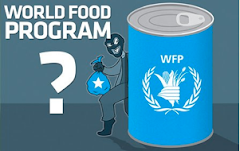
Up to half UN food aid goes astray

The United Nations has found that up to half the food aid in Somalia is diverted to corrupt contractors, local UN workers and Islamic militants.

A report by the UN monitoring group in Somalia blames the problem on the distribution system run by the UN's World Food Program.

The group found that agency contracts for food transport are awarded to a few powerful individuals who operate cartels to sell the food illegally.

The report has not been made public yet, but its contents have been leaked.

- BBC

Somalia: Al-Shabaab, UN officials accused of aid grab

Contractors, local UN workers and Islamist militants in Somalia have been accused of diverting food aid meant for refugees and destitute Somalis for their own consumption, a United Nations study has revealed. The report is due to be officially presented to the UN Security Council on 16 March.

The UN document says food aid is diverted to a web of distributors, transporters and armed groups, with some local UN workers also taking a cut in the profits, journalists at the UN office have reported. Extracts of the report have been quoted by the New York Times and other news agencies.

Claims that food aid was being diverted first surfaced in 2009, and as a result, the U.S. reduced funding to Somalia, fearing that aid was falling into the hands of the al-Qaeda linked Islamist group al- Shabab.

According to the findings, World Food Program (WFP) contracts are awarded to a few influential individuals who operate cartels that sell the food illegally. Just three contractors receive the vast majority of WFP transportation contracts, making them some of the wealthiest and most influential individuals in Somalia.

The UN secretary general’s special representative for Somalia, Ahmedou Ould Abdallah, told reporters that the greatest need in Somalia was a stable and internationally supported government.

"With a... government we would avoid this loss [of aid], not only of 50% but of 5%. We have to go to the root cause of the problem, which is [the] lack of a supported government. We have a government - why don’t we support it?" Abdallah was quoted as saying.

In February, al-Shabab banned the food agency from operating in Somalia, claiming the WFP was distributing stale food, and affecting local production of food.

WFP announced a suspension of its work in the southern part of the country because of attacks and extortion by local militants. Transporters are reported to have to navigate roadblocks manned by various militias and bandits.

WFP says previous internal investigations have failed to find proof of widespread abuse but the organization has vowed to examine the new allegations of diversion of food aid, and the existence of a de facto cartel.

Somalia has been without an effective central government since 1991. Years of fighting between rival warlords and an inability to deal with famine and disease have led to the deaths of up to one million people. Relations with neighbors have been soured by its territorial claims on Somali-inhabited areas of Ethiopia, Kenya and Djibouti.

Somalia is arguably Africa’s worst humanitarian crisis: a third of the population is dependent on food aid.

A UN-backed transitional government emerged in 2004 but has failed to make significant changes due to incessant attacks from al-Shabab extremists.

WFP Wants an Independent Probe Team on its Operations in Somalia

Somalia - women receiving food aid

Nairobi, Kenya 11th March,2010 … World Food Programme (WFP) has said it would welcome an independent investigation into its food assistance operations in Somalia. At the same time, the agency said it would not engage in any new work with three transport contractors named in a report from the United Nations Monitoring Group on Somalia, which alleged they were involved in arms-trading. “The integrity of our organization is paramount and we will be reviewing and investigating each and every issue raised by this report,” said WFP Executive Director, Josette Sheeran in a statement issued in Nairobi.

Sheeran added that WFP lives every day with the dangerous realities of our Somalia operation and would do everything it could to reach the hungry in Somalia. In January, WFP also suspended operations across southern Somalia in response to intimidation of its staff and the imposition of a number of unreasonable demands by armed groups that contravened WFP’s rules and regulations for delivering food for the hungry.

The report by the UN Monitoring Group on Somalia, due to be presented to the UN Security Council next week, alleges that contractors have diverted WFP food assistance away from the hungry. Sheeran noted that vulnerabilities are always present in conflict areas, and many of the issues raised have already been addressed, while other points identified by the UN Monitoring Group conflicted with operational facts and information.

UN says US aid restrictions hurting hungry Somalis

NAIROBI, Kenya — U.S. restrictions designed to stop terrorists in Somalia from diverting aid are hurting humanitarian operations in the lawless Horn of Africa country, U.N. officials said Wednesday.

U.N. agencies have not seen any evidence from the American government that food aid is being diverted to Islamists fighting the U.N.-backed Somali government, said the top U.N. humanitarian official for Somalia, Mark Bowden.

"What we are seeing is a politicization of humanitarian issues," Bowden told journalists in the Kenyan capital of Nairobi. "The options for a lot of Somalis look pretty bleak."

The U.S. reduced its funding to Somalia last year after its Office of Foreign Assets Control expressed fear that the extended supply line and insurgent-heavy areas where aid agencies were operating meant aid could be diverted to a group with links to al-Qaida.

The reduction contributed to a shortfall in funding that meant only two-thirds of the $900 million needed in 2009 was raised, said Kiki Ghebo, the head of the office responsible for coordinating humanitarian affairs in Somalia. The U.S. is the biggest contributor of humanitarian aid in Somalia.

Bowden says agencies were being asked to comply with impractical requirements by the U.S., but he declined to give details. He said stateside employees of the U.S. government's aid agency, USAID, were eager to resolve the impasse but said that they faced resistance from higher up in the administration.

"The whole issue seems to be dragging on for far too long," he said.

In Washington, a White House spokesman placed blame for the situation on terror groups active in Somalia.

"The actions of al-Shabaab and other violent extremists are what are denying Somalis urgently needed humanitarian aid," spokesman Tommy Vietor said. "The United States is committed to meeting humanitarian needs, including those in Somalia, and ensuring that our assistance does not fuel conflict."

Al-Shabaab is the most active group targeting Somalia's impotent transitional government, which is backed by the United States.

American reluctance to release funds is not the only problem agencies are facing. The World Food Program pulled out of much of southern and central Somalia after local Islamist commanders demanded $20,000 payments every six months to allow them to operate.

The Islamists also demanded that WFP fire all women working for them unless they were in clinics or health centers.

WFP will not restart its operations until the conditions are lifted and they are given assurances they will be allowed to operate safely, said spokesman Peter Smerdon.

The funding crisis and partial withdrawal of WFP comes as the government is preparing to launch an offensive against the Islamists. The U.N. refugee agency says 100,000 people have fled their homes throughout the country since January amid an upsurge in fighting.

Somalia has not had a functioning government for a generation. Successive administrations supported by the international community have failed to deliver either security or services to the people. Nearly half the Somali population is dependent on external aid
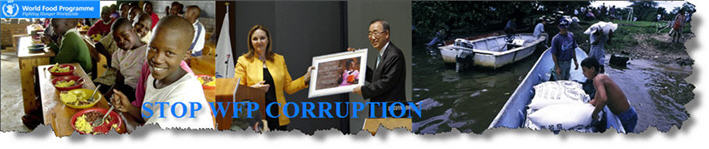
Somali militants order U.N. food agency to leave

(CNN) -- Somalia's main militant group has banned the United Nations food agency and ordered its aid workers to leave the impoverished country.

Al-Shabaab released a statement to the media Sunday, accusing the World Food Programme of distributing expired food and undermining local farmers, said Peter Smerdon, a WFP spokesman.

Smerdon declined to comment on the accusations, but said the agency is committed to the failed nation in the Horn of Africa.

"WFP is determined to help the people of Somalia in need of assistance, regardless of who controls the areas in which they live, as long as it is safe for our staff to do so," Smerdon said.

About half the population -- or nearly four million Somalis -- is starving, according to the United Nations.

The food aid agency suspended work in southern Somalia in January, saying rising attacks and unacceptable demands from armed groups had made it impossible to work in the region.

Smerdon declined to say whether the agency had resumed operations in the south.

However, a statement on the WFP Web site says it continues to deliver food to other parts of the country, including the volatile capital, Mogadishu.

Al-Shabaab, the al Qaeda proxy in the country, controls much of southern Somalia. It has accused the food aid agency of having a political motive and supporting the U.N.-backed transitional government. WFP has denied the allegations and said it is impartial and nonpolitical.

Somalia has not had a stable government since 1991, and fighting between the rebels and government troops has escalated the humanitarian crisis in the famine-ravaged country.

Somalia: 'WFP Will Continue Its Aid Support in Somalis' - Official

Peter Somerton, the spokesman of the World Food Program (WFP) has Monday said that they will continue their aid support to the Somali people, just a day after Harakat Al-shabab Mujahideen issued a press release suspending whole activities of the agency.

"WFP will not stop providing food aid to the displaced Somalis in the camps. It will continue its work. How ever is possible for the staff of WFP can go ahead for their support, we shall continue our aiding the Somalis anymore," said the spokesman.

Speaking to Shabelle radio, Peter Somerton said, 'We will not consider the rulers, but our aim is to help the feeble and needy people of Somalia," he added.

The spokesman declined to comment on more about the repeated statements from the Islamic administration of Harakat Al-shabab Mujahdeen for suspending the program's activities in Somalia.

The statement of the World Food Program comes as press release banning its activities issued by Harkata Al-shabab Mujahideen in Somalia on Sunday.

UN agency acts on Somali food-aid claims

The UN's food agency has blacklisted three contractors named in a UN report which alleged that food aid in Somalia was being diverted.

The World Food Programme said it would not engage in any new work with the contractors and welcomed the report.

The WFP stressed that it had dealt with many of the concerns in the report.

The UN monitoring group document said corrupt contractors, militants and local UN workers were diverting food aid and selling it illegally.

Earlier this year, the WFP was forced to suspend food distribution in southern Somalia because of threats from armed groups.

Widespread corruption

"The integrity of our organisation is paramount and we will be reviewing and investigating each and every issue raised by this report," said WFP executive director, Josette Sheeran.

"WFP stands ready to offer full co-operation with any independent inquiry into its work in Somalia."

The UN document says up to half of the food aid in Somalia is diverted to a web of corrupt contractors, distributors, transporters and armed groups.

Some local UN workers are also accused of taking a cut in the profits.

It blames the problem on the food distribution system in the war-torn country, where transporters have to navigate roadblocks operated by various militias and bandits. Charges that food aid was being diverted first surfaced in 2009.

The US has since reduced funding to Somalia, fearing that aid was falling into the hands of the Islamist group al-Shabab.

The report, which was leaked to various media organisations this week, is due to be officially presented to the UN Security Council on 16 March.